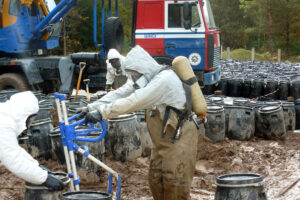
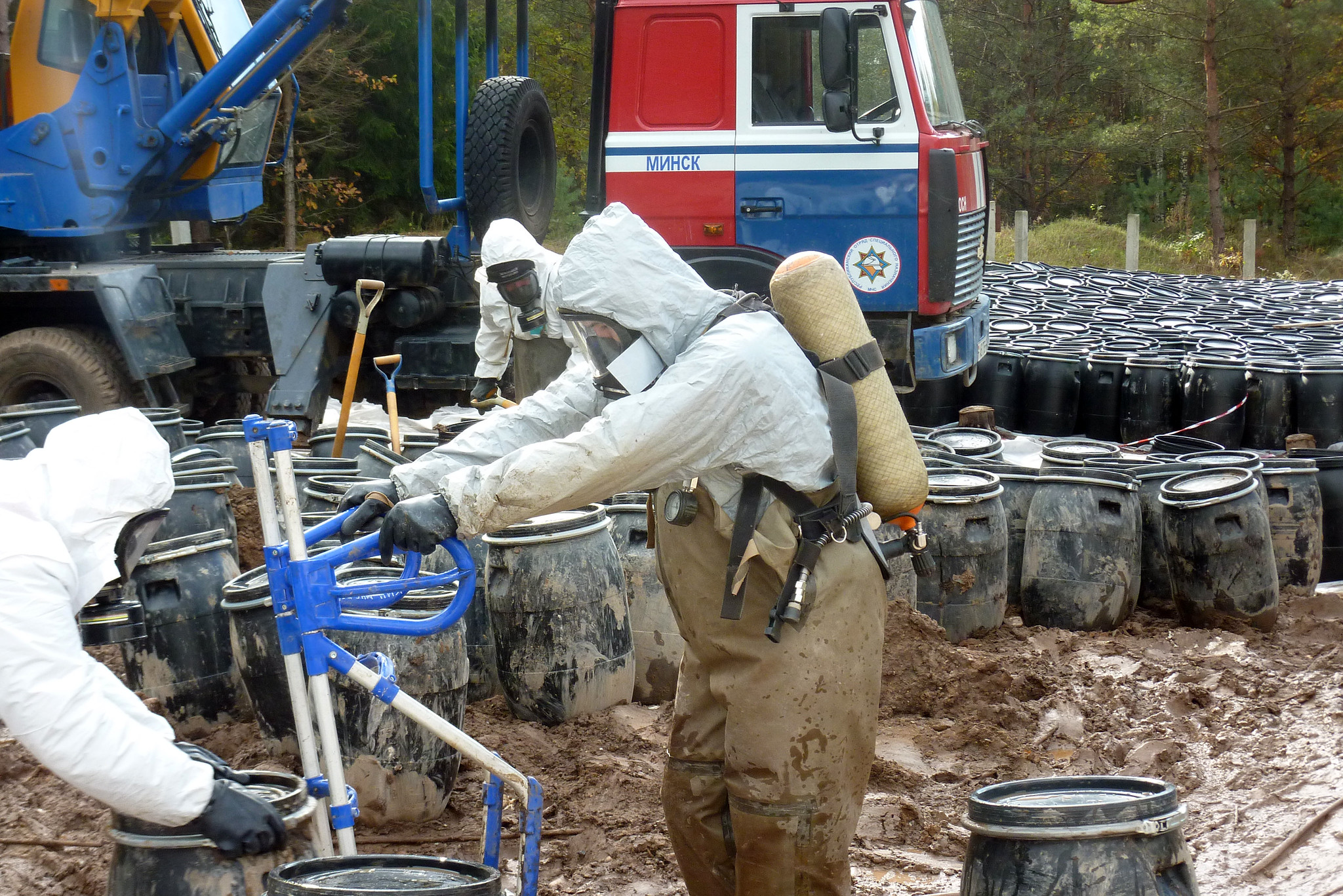
Nine hundred and fifty tons of obsolete pesticides have been excavated from the landfill, packed into proper tare and are shipped for destruction in Belarus. Photo by Preston Irina Oleinik/ World Bank via Flickr used under CC BY-NC-ND 2.0 license
In the second part of the World Food Day series, Mairead Redmond explores why the agricultural industry needs to break from the toxic trifecta of fossil fuel-based products and move towards nature-friendly methods of farming.
Suggested teacher activities for adapting and reusing are included below.
Many pollinator populations are declining at rapid rates, both locally and globally due to factors like habitat loss and intensive agricultural land management. In Europe, at least 37% of bee and 31% of butterfly species are in decline. These factors are propelled by the burning of fossil fuels and the usage of synthetic/fossil fuel-based agrochemicals, such as fertilisers and pesticides. Historically, there was a notable shift towards using fossil fuel-based products in agriculture after World War II as this point marked the arrival of synthetic products on the global market.
When these agrochemicals were first introduced, synthetic fertilisers helped farmers to dramatically increase yields as synthetic pesticides controlled pests’ populations which prevented crop loss. Yet this productivity came at a steep cost overtime, adversely impacting the health and wellbeing of people, pollinators, and the planet.
As part of the World Food Day series, this feature will explore the many reasons why the agricultural industry needs to break free from the toxic trifecta of fossil fuel-based products and move towards nature-friendly methods of farming.
The steep cost of relying on fossil fuels
A long-term overdependence on synthetic chemical fertilisers, pesticides and other industrial farming methods have damaged soils’ natural fertility and structure This has created a vicious cycle in which farmers apply even more chemicals to achieve crop yield, and to control pests.
The Union of Concerned Scientists based in the US estimate that half of synthetic fertilisers applied worldwide are now lost from farm fields rather than taken up by crops contributing to air pollution, habitat loss, and singlehandedly contributing to an estimated 5% of global heat-trapping emissions. In Ireland, the Central Statistics Office (CSO) has found that synthetic fertilisers contributes over 20% of the total greenhouse gas emissions from agriculture (CSO data).
The major problem with pesticides is that they not only target pests that eat crops, they also harm earthworms, soils, and plants, driving a rapid decline of pollinators, like birds, bats, and bees, due to the toxins in pesticides, and a loss of biodiverse-rich habitats.
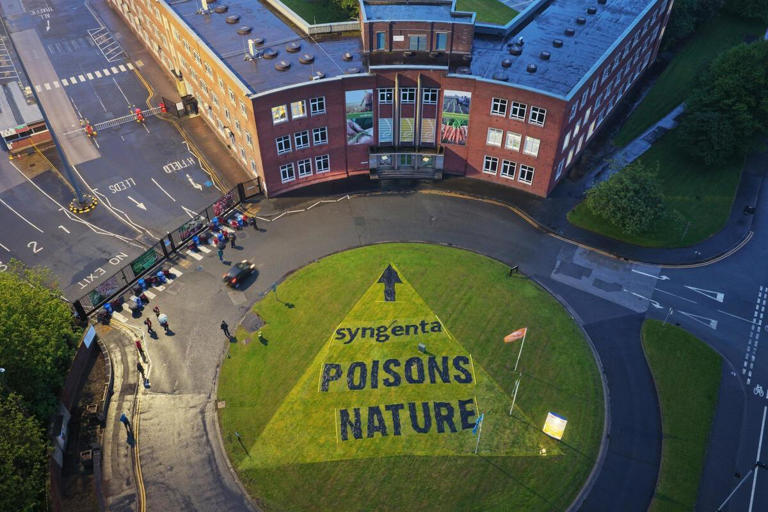
Research by Greenpeace UK found that of the Syngenta-made pesticide, Hallmark, used in Ireland, UK and other countries, is enough to kill 13 million bees. The toxic chemicals from synthetic pesticides can be transported anywhere across the country by the wind and the rain, disrupting entire ecosystems, harming human health, and threatening food security.
With temperatures rising from a changing climate, the number of pests are increasing and crop resilience is decreasing, requiring ever-larger quantities of pesticides. This rise in pesticide use will cause insects and weeds to develop resistance in greater numbers, whilst also amplifying the existing harms with pesticides.
The high level of fossil fuel dependency is extremely risky. Fossil fuels are highly price volatile, and world events, like the blockade of the strait of Hormuz, can cause massive surges in the prices of fossil-fuel based products. Although media outlets are reporting the recent price hikes in energy bills as the result of an ‘energy crisis,’ these events could instead be framed as the result of a ‘fossil fuel dependency crisis’. For example:
- The energy in Ireland 2024 report from the SEAI shows that Ireland remains ‘highly dependent on fossil fuels to satisfy [nationwide] energy needs’ at , showing how fossil-fuel dependency is not industry specific in Ireland.
- At a time when farmers and families are struggling to pay their fossil fuel energy bills, Oxfam predicts an increase of almost $37 million a day profits compared to the 2025 profits of six of the biggest fossil fuel companies – Chevron, Shell, BP, ConocoPhillips, Exxon and TotalEnergies.
As study after study shows, fossil fuels drive economic vulnerability, poverty, and food insecurity. The fossil fuel dependency in farming is illustrated in the toxic trifecta graphic below:
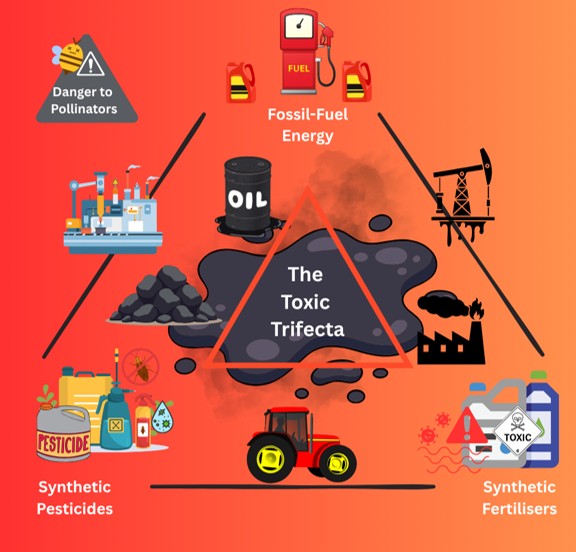
Today, many pesticides, fertilisers and energy supplies are made from fossil fuels which contribute to climate change, declining biodiversity levels, habitat loss, and pollution of air, water and soils.
Industrial farming often specialises in growing only one type of crop, or grazing one organism across agricultural lands, known as monocultures, which degrades soils, increases agrochemical dependency, and destroys biodiversity. The effects of monocultures and other agricultural sector practices on pollinators and people will be further explored in the next feature in the World Food Day series.
Despite the disastrous impacts of synthetic agrochemicals on agricultural lands, the fossil-fuel industry has successfully convinced farmers in the US and in other countries that its products are essential in agricultural processes. There are pathways that the agriculture sector can take to break free from its fossil-fuel dependency. However, this transition requires a transformation in agriculture workers source/produce energy, control pests, and fertilise the land. The next section will explore how farmers can break free from the toxic trifecta, and highlight how farmers can play a pivotal role in reducing national dependency on fossil-fuels and become custodians of nature.
Phasing out fossil fuels in farming
Organic farming is a radical alternative to synthetic/fossil-fuelled dependent farming. Organic agriculture is based on the principles of health, ecology, fairness and care. Organic farming is a widely recognised, certified and regulated system of farming which works with nature to grow crops and produce food. Synthetically compounded fertilisers, and pesticides, are excluded or severely restricted in organic farming.
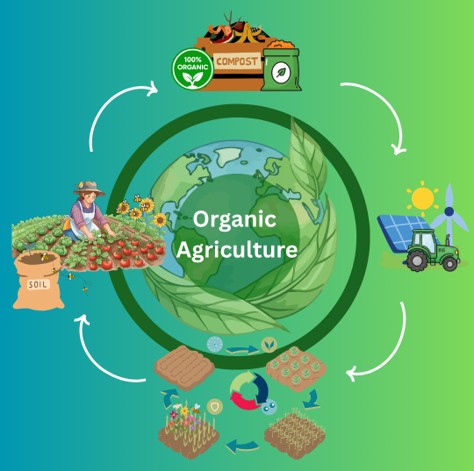
Organic agriculture relies on crop rotations, the recycling of farm-produced organic materials, such as manure/animal waste, and compost, and off-farm organic wastes to provide a variety of non-chemical methods for fertilising soils, and controlling pests, diseases and weeds. Organic production consists mostly of plant and animal agricultural products that are either whole foods, or minimally processed foods, providing high levels of nutrition.
Prior to World War II, organic farming was the main agricultural approach. If organic farming methods became the norm again in the agricultural sector, farmers could:
- contribute to lowering greenhouse gas emissions through decreasing or eliminating fossil fuel-based products
- generate renewable energy on their lands using wind and/or solar
- increase biodiversity areas,
- compost organic waste in order to fertilise crops, and
- harness an improved quality of soils that sequester carbon
Overall, organic farming can be a profitable system of farming by maintaining good output levels through the adaption of farming methods that aligns with the natural environment, coupled with lower production costs (eliminating/decreasing fossil fuel-based products) and premium market prices for organic foods, contributing to higher profit margins.
2,200 farmers are now farming organically in Ireland with the Irish organic retail food market estimated by Bord Bia to be worth over €260 million annually and the European Union market for organic food worth €45 billion.
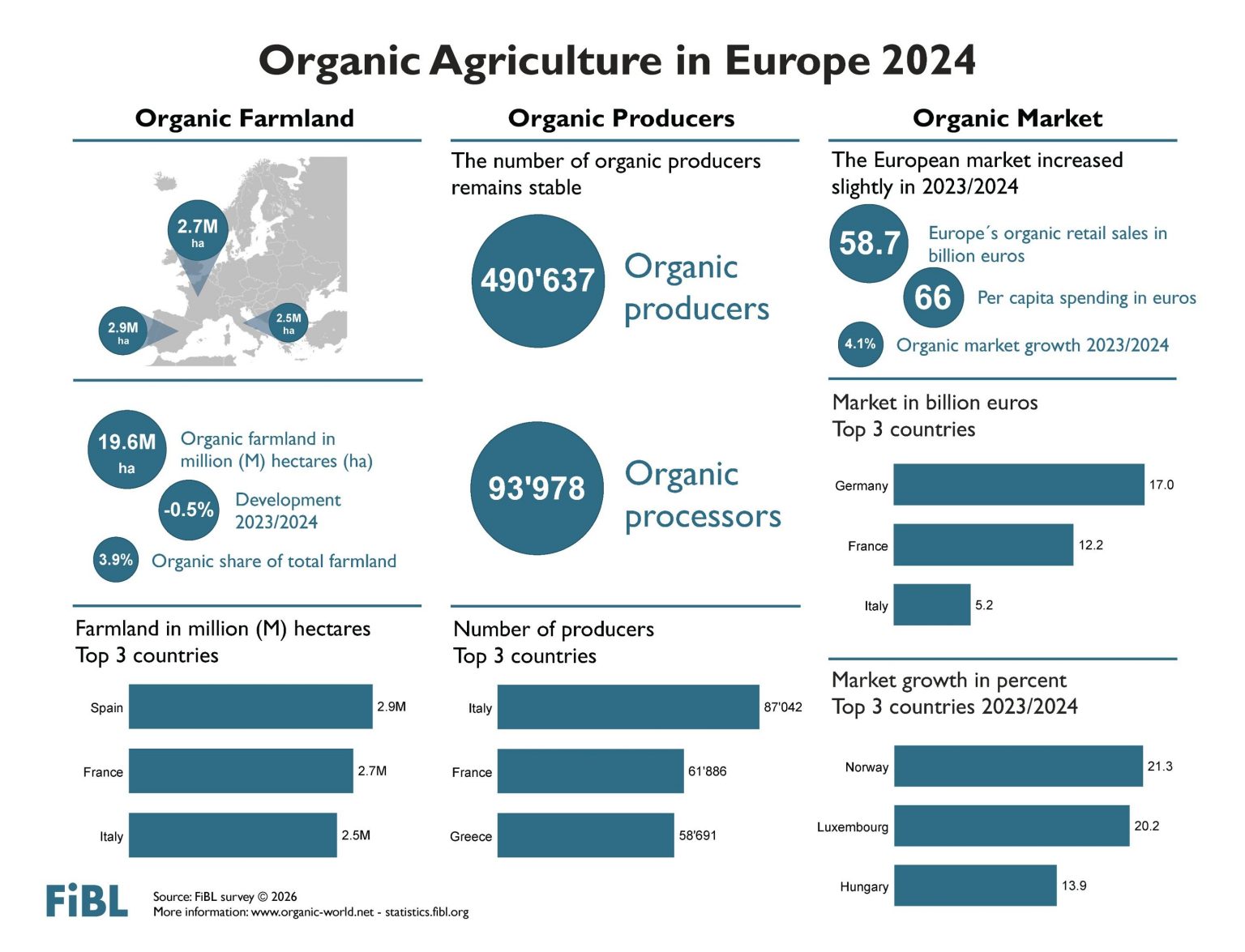
When nature is no longer poisoned by toxins from agrochemicals and deprived of biodiverse rich habitats, wildlife and pollinator populations can bounce back from depletion in a few short years. While only 5% of farms are organic in Ireland, this figure is predicted to gradually increase over the next decade. There is immense potential to create high profit margins in the organic agriculture market:
The global organic market is worth about €150 billion per year, and some projections indicate that this will grow to €575 billion by 2034. Ireland’s total agri-food exports currently stand at about €19 billion per year.
Source: Journal.ie (August 2026)
Organic farming is a branch of a broader natural farming concept known as agroecology. Agroecology is defined as a holistic and integrated approach that blends ecological and social principles in the development and re-design of sustainable agrifood systems.
Agroecology promotes pollination services which significantly benefits agricultural productivity, food security, and the achievement of the United Nation’s sustainable development goals.
A couple of examples showcase this in action. Small-scale farming is a major source of food production and income in many countries and employs about 2.1–2.5 billion people globally, of which the majority live in developing countries. Researchers in the journal ‘Sustainability’ reported in 2020 that small-scale farming creates ‘diverse semi-natural ecosystems through a combination of wild and domesticated species.’
Lastly, explore the following table which is adapted from a study on critical role of bees in sustainable development (produced by researchers for the journal Ambio in 2021).
| Table: The contributions of bees towards relevant SDG targets | |
|---|---|
| Sustainable development goal (SDG) | Details on the contributions that bees may provide towards achieving the SDG targets |
| 1. No Poverty |
- Keeping bees offers economic diversity as an income source (1.1)
- helping build resilient livelihoods for poor and vulnerable peoples (1.5) - whilst potentially providing equal access to economic and natural resources for both men and women (1.4) |
| 2. Zero hunger |
- Bee pollination increases crop yield (2.3) - enhances the nutritional value of fruits, vegetables, and seeds (2.2) |
| 3. Good health and well-being |
- Bee products provide safe and affordable medicinal sources (3.8) - Used in traditional and modern medicine to treat non-communicable diseases such as cancer through strong bioactive compounds (3.4) - Bee pollination potentially contributes to the growth and diversity of plants that are important for improved air quality (3.9) |
| 4. Quality education | Vocational training for keeping bees can enhance equal opportunities for employment, training and entrepreneurship amongst men, women and indigenous people (with traditional knowledge) (4.3, 4.4 and 4.5). |
| 5. Gender equality | Keeping bees as a hobby or being involved in beekeeping can enhance opportunities for women’s involvement in economic, social and political decision-making processes even in communities that deprive women of property rights (5.5, 5.a) |
| 6. Clean water and sanitation | Bee pollination may contribute to growth and diversity in water-related ecosystems, such as mountains and forest. Appropriate afforestation efforts may provide new resources for commercial bee operations whilst potentially contributing to regional water supply (6.6) |
| 7. Affordable and clean energy | Bee pollination improves production for oilseed crops used as biofuel such as sunflower, canola and rapeseed (7.2) |
| 8. Decent work and economic growth |
- Improved agricultural production from bee pollination may contribute to the gross domestic product (GDP) of nations (8.1) - Beekeeping can diversify livelihood opportunities for men and women in rural areas (8.6) - Support nature-based tourism initiatives (8.9). |
| 9. Industry innovation and infrastructure | Bees are an element of nature that inspires human innovations (e.g., airplane design and computer algorithm development) and new honey-related products (9.b) |
| 10. Reduced inequality |
- Improved livelihoods from beekeeping and the contribution of bee pollination towards GDP can support sustainable income growth for lower income groups (10.1) - Which can potentially contribute to promoting inclusive social, economic and institutional development (10.2) |
| 11. Sustainable cities and communities |
- Bees can be useful in monitoring air quality in urban areas, as pollination of urban flora can support improved local air quality (11.6) - Bees can enhance pollination and self-sustainability of urban gardens and public open spaces (11.7) |
| 12. Responsible consumption and production |
- Bee pollination can contribute to reducing food waste by improving visual aesthetics of food (shape, size and colour) and increase shelf life (12.3) - Beekeeping can be marketed as sustainable tourism for regional development (12.b) |
| 13. Climate actions | Use of bees and bee products for environmental monitoring can improve understanding of climate impacts on the environment (13.3) |
| 14. Life below water | Bees can potentially contribute to improved production of plant-based sources of compounds commonly found in fish. Overharvesting of fish can be managed by promoting production and consumption of alternative plant-based nutrient sources (14.4) |
| 15. Life on land |
- Bees contribute to biodiversity by pollinating flowering trees and plants (15.5) - Beekeeping can contribute to forest conservation (15.1) - Incorporating beekeeping in local planning processes may support reforestation activities which can result in poverty reduction and sustainable regional development (15.9). |
Next time: Agroecology and the protection of pollinators will be explored in the third part in the World Food Day series.
- Explore the first part in our World Food Day series which follows the role of the mighty pollinators and the rising influence of ultra-processed food.
Activities
- Design a poster to convince farmers to break free from the toxic trifecta and transition to nature-friendly farming.
- Imagine you are a farmer, what eco-friendly farming practices would you implement? Brainstorm for 5 minutes, discuss in pairs and then, open it up to the wider classroom for greater discussion.
- Imagine you are a politician and you had to introduce laws that would support organic farming, discuss in pairs about what laws you’d introduce for 5 minutes and open it up to the wider classroom for greater discussion.
- Write a letter to the Agri-Food Regulator about what standards or regulations you think would support pollinators and ecological systems (include links to agriculture, biodiversity and food security).
This World Food Day series is brought to you by Concern Worldwide, Scoilnet, Self Help Africa and developmenteducation.ie
More on developmenteducation.ie