Resource Title
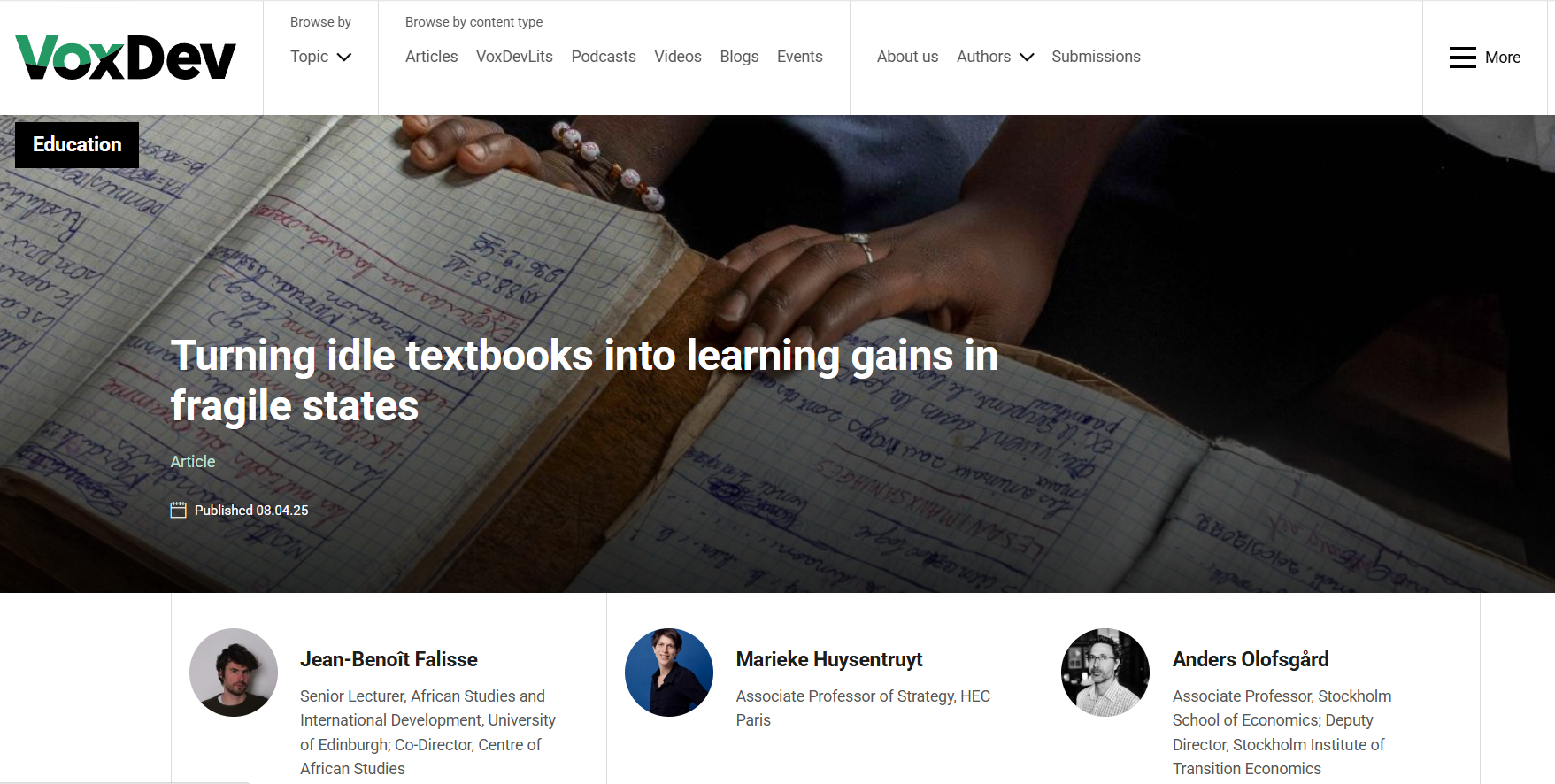
Turning idle textbooks into learning gains in fragile states
Summary
An insightful article exploring a low-cost study in the Democratic Republic of the Congo. It demonstrates how allowing primary students in conflict-affected, resource-poor regions to take textbooks home for self-study significantly boosts exam participation and language learning outcomes.
Resource Details
Description
This article explores a study conducted in the Democratic Republic of the Congo (DRC), focusing on whether allowing students to take textbooks home can improve learning outcomes in highly resource-constrained environments. The research, carried out in 90 primary schools in South Kivu, a region affected by local conflict, tested a simple intervention: encouraging students to take French and math textbooks home for self-study, combined with modest behavioural incentives like public recognition, classroom rewards, and small financial incentives for schools.
The results of the study were promising. Students in schools with the intervention were 14% more likely to take the national exam, and those who passed scored higher than their peers in control schools. Additionally, students in the intervention group showed significant improvement in French language test scores, with score gains of 0.25–0.27 standard deviations. However, there was no significant improvement in mathematics performance, suggesting the need for more active teacher involvement.
The success of the intervention was attributed to three key factors: increased homework completion, better textbook use by teachers in class, and heightened student motivation. The study also found that the intervention had the largest impact on lower-performing students and those in classrooms with weaker teachers, demonstrating that self-study can be particularly beneficial in resource-poor settings.
The study’s findings suggest that simple, low-cost interventions—like enabling students to take textbooks home—can significantly improve learning outcomes, particularly in fragile states. Given the rising challenges in global education, including cuts in international aid and growing political tensions, this approach offers a scalable and cost-effective solution to enhancing education in conflict-affected areas, where resources are scarce, and educational disparities are wide.
Available from:
Available online from VoxDev: Impact of textbooks on learning in the Democratic Republic of Congo