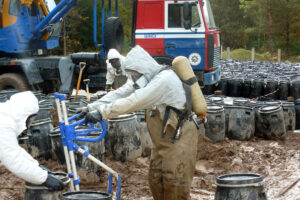
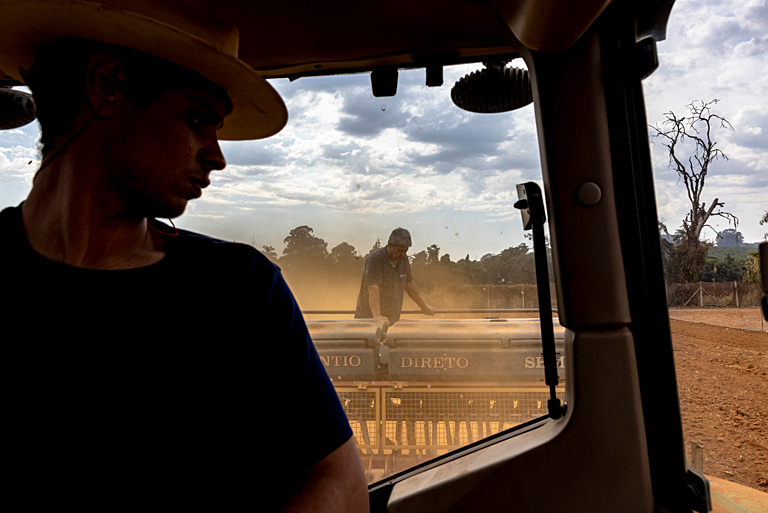
A rural worker works in the fields of a monoculture plantation. The region is one of the country’s main sugarcane producers. São Paulo State, Brazil. July 25th 2025. Photo by Victor Moriyama / Climate Visuals.
In the third part of the World Food Day series, Mairead Redmond explores the harmful effects of monocultures and monopolies in the agriculture and food industry.
Teacher: teacher supports and activities are included at the end of the page below.
Three years ago, global agricultural land covered more than one-third of the global land area.
From climate shocks to, fossil fuel dependency, and the biodiversity crises the global food system has been hit by multiple crises. The UN’s Food and Agriculture Organization (FAO) estimates that 8.2% of the global population faced hunger in 2024 while 28% experienced moderate or severe food insecurity, and many communities are just one shock away from food insecurity.
A growing international body of research points to the positive impacts of applying climate-resilient and sustainable farming approaches, including agroecology and organic farming, at small and large scales to enhance productivity, protect and restore agroecosystems, and strengthen the resilience of food production to climate shocks, stresses and crises.
Despite the benefits of agroecology and nature-friendly farming practices, many farmers today are using toxic fossil-fuel based agrochemicals, such as synthetic pesticides and synthetic fertilisers, and manage agricultural land intensively by grazing only one organism or crop across their lands, harming the health and wellbeing of pollinators, humans, and the wider ecosystems. We covered this in the second part of the World Food Day series.
The fossil fuel industry continues to dominate agrochemical production and energy generation markets, among others. Fossil fuel companies have consolidated monopolies where many people continue to depend on their products with little to no alternatives available. This leaves communities vulnerable to price hikes that can cause economic instability, poverty and food insecurity.
This feature, the third in the World Food Day series explores the harmful effects of monocultures and monopolies in the agriculture and food industry and explore ideas for counteracting this trend by reviewing the many benefits of moving towards agroecology approaches.
Mind the monos! Monocultures and monopolies create dangers
‘Monoculture’ is the agricultural practice of growing a single crop or raising a single type of organism over a large area. After World War II, monoculture became more common in farming practice alongside the rise of synthetic fertilisers and synthetic pesticides.
Monoculture practices began to grow in popularity when access to much larger distant markets made it more profitable to specialise in a single crop due to financial incentives like favourable tariffs, subsidies and regulations to mass produce the one specific product continuously. Specialisation leads to more efficient planting and harvesting, fewer types of expensive equipment, fewer labourers with specialised knowledge of individual crops, and strengthening knowledge of one value chain and commercial market.
Here’s an example of what this leads to. The FAO’s interactive online report on The State of the World’s Biodiversity for Food and Agriculture 2019 found that only 9 plant species account for almost two-thirds of total crop production, demonstrating how monocultures supply most of our food across the planet.
However, monocultures come at a steep cost, which are similar to the impact of fossil-fuel based products on nature. Monocultures are harmful to pollinators, and other species, that depend on biodiverse rich landscapes to thrive and flourish. In Ireland, for example, 70% of Irish land used for agriculture is often a monoculture of ryegrass, providing very little support or diversity for pollinators, which contributes to the emergence of invasive species, diseases, and other challenges. These issues are further depicted in the below video
Monopolies are like monocultures in business. A monopoly is a market structure where a single company or seller supplies the entire output of a good or service, facing no meaningful competition or alternatives.
For instance, many fossil fuel companies have monopolies in the energy generation industry, with fossil fuels accounting for 80% of global energy consumption in 2025 depicting how fossil fuel dependency is a global problem. Economic supports such as subsidies, tax cuts, and deregulations continue to favour companies that mass produce goods and services, with little to no regulation for its environmental impacts.
- Despite the overwhelming consensus from the scientific community that the burning of fossil fuels is the number one driver of climate change since pre-industrial times, the Irish government allocated a total of €4.67 billion in subsidies to fossil fuel companies in 2024, according to the Central Statistics Office (CSO). The fossil fuel dependency in Ireland is further explained in the developmenteducation.ie reflection on a fossil fuel free future.
- Actions and politics from the US continues to have a global impact. A recent Guardian news report showed how the fossil fuel industry secured an estimated $190bn in tax breaks and subsidies over the next decade after responding to Donald Trump’s pre-election call for major political campaign donations. American taxpayers will be picking up on this tab to pay higher bills and public health costs associated with pollution from these activities. The report also noted that the fossil-fuel industry secured various policies that would curb competition from clean energy, increase gas and coal consumption and:
...force Americans to spend at least $580bn in added fuel costs alone over the next three decades”.
Energy new generation of agrochemicals are not the only markets the fossil fuel industry has monopolised, with about 99% of plastics derived from fossil fuels. Plastics are harmful to our health and wellbeing:
- Plastics cost the world over $1.5 trillion annually in health-related economic losses.
- Smaller pieces of plastics called microplastics have been discovered in the water we drink, the food we eat, and the air we breathe depicting how plastics directly affects us all.
- Despite plastics taking centuries to breakdown, and the associated health issues, plastics are the most common material used to package food and drinks, both short shelf-life types of products.
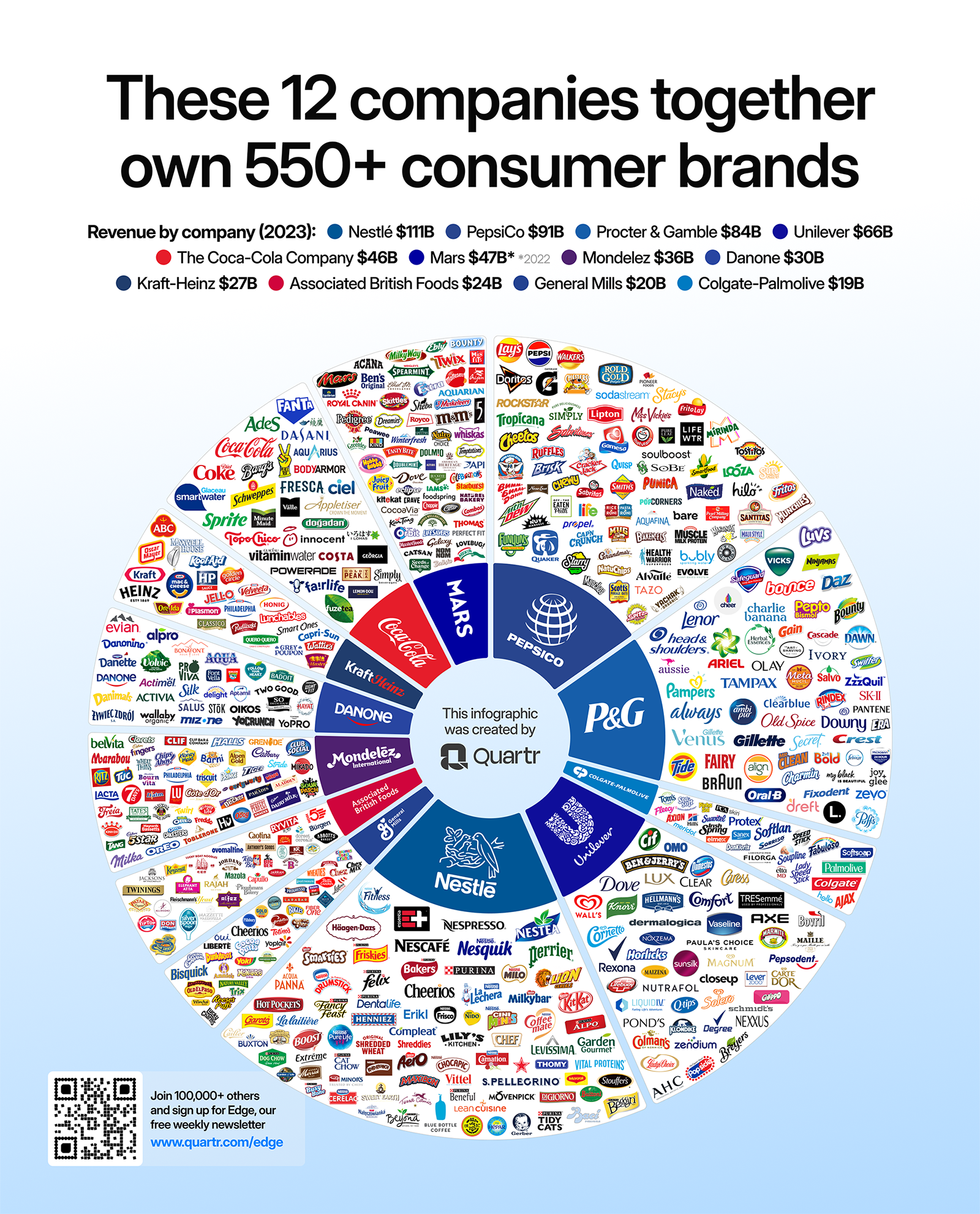
Synthetic plastic packaging is used by 12 major food and drinks companies that own over 550 consumer brands. Many of these 12 companies create ultra processed foods and drinks products which often lack in nutritional value and lead to overconsumption of ultra-processed food (UPFs) linked to severe health issues (see the first feature in this series for more on UPFs).
Mono crops and monopolies in business reveal some of the underlying realities of how our financial system and government financial assistance can together slow down innovation all in the name of brand recognition and growing into new markets.
Behind the label
In recent years governments have adopted measures to safeguard the health of children and adults by introducing front-of-pack warning labels, marketing restrictions on unhealthy food products and taxes on junk food, ultra-processed food and to make them less alluring to consumers.
Some of the world’s biggest ultra-processed food companies have filed scores of legal cases to challenge government policies that aim to tackle junk diets, including several of the corporate monopolies discussed above: Coca-Cola, PepsiCo, Mondelēz, Kellogg’s, and Danone.
The Guardian reports that these lawsuits are prolonging the growing global public health crisis, and costing countries billions in legal and healthcare costs: 235 lawsuits have been brought against governments in five countries from 2010 – 2026, for example (for more see The Guardian news report If all else fails, sue’: how ultra-processed food firms are using the courts to obstruct health rules).
Similarly, the fossil fuel industry spends millions of dollars on political campaigns, as the US examples show, on professional lobbying to secure tax breaks and weakens climate rules (for more on these check out our feature A fossil fuel free future?).
Together these examples show how several corporate monopolies uses their power, wealth and resources to prevent or stall collective social goals such as the UN sustainable development goals in order to maximise profits, above all else.
30:1 or how we are funding nature’s decline and what can we do about it
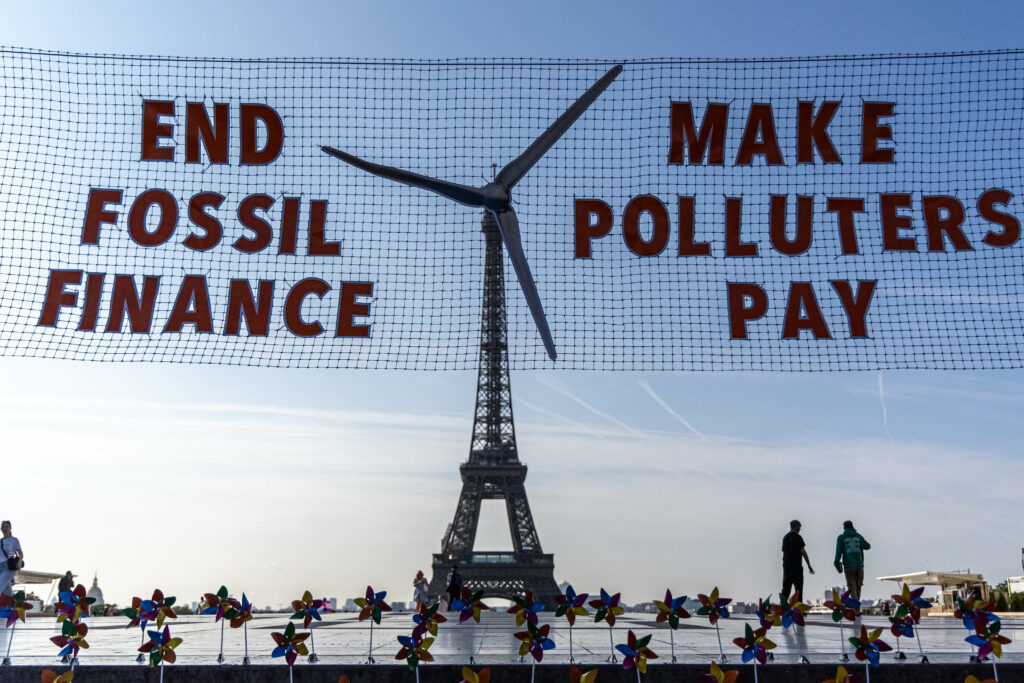
Biodiversity, or in other words, a wide variety of all living things like pollinators, plants and animals, is the life-support system of our planet. Unfortunately, monocultures, the burning of fossil fuels and the usage of fossil fuel-based products, such as synthetic fertilisers, synthetic pesticides, and plastics, have all contributed to the degradation of soils, air and water pollution, and the decline in biodiversity levels. The UN Environment Programme’s State of Finance for Nature report shows that for every $1 spent protecting nature globally, the world spends $30 destroying it.
As covered at the start of this series, assigning legal rights to essential natural reserves and species can provide a legal framework to address the harms inflicted on nature by destructive companies and industries. Additionally, instead of polluting businesses and industries receiving economic incentives and favourable treatment, a measure such as ‘the polluters pay’ principle is a legal framework all governments can introduce in their respective countries.
The Polluter Pays Principle (PPP) mandates that those responsible for pollution should bear the costs associated with managing it, thereby promoting environmental accountability and sustainability.
The Polluters Pay Principle is an existing European Union Directive and it is a fundamental concept in environmental law and policy, asserting that polluters are responsible for the costs of pollution prevention and control. This principal puts the onus of waste and pollution on companies instead of consumers, and this can encourage companies to innovate their processes to align with natural processes so they are not fined or face legal punishments. It also provides a financial pathway for citizens and countries to sue industries that have harmed people, pollinators and the planet, such as fossil fuel companies
Reversing the trend – exploring examples from Costa Rica and Andhra Pradesh
While nature-supportive developments suffer from chronic underfunding there are pathways that can help fund farmers and landowners to manage their lands in ways that support biodiversity, pollinators populations, and wider ecosystems.
For example, there is a Payments for Environmental Services (PES) programme in Costa Rica that supports a scheme of voluntary transactions to individuals or groups, typically landowners or farmers, on the condition that the recipients manage their land for ecological services. Since 1990, programmes like PES have helped the country to double the size of its forests while tripling its GDP per capita, supporting more than 18,000 families. Today, close to 60% of the land is forest, and the landscape is home to around half a million plant and animal species. Similar ecologically supportive schemes could be implemented in other countries.
Agroecological approaches can play a pivotal role in a transition to a more sustainable future, as they:
- favour the use of natural processes,
- limit the use of synthetic agrochemicals inputs, promote closed cycles, such as compostable packaging, with minimal negative effects
- stress the importance of local knowledge and participatory processes that develop knowledge and practice through experience, as well as more conventional scientific methods, and address social inequalities.
Although, agroecology is different to the norm in agriculture today, agroecology is not a new invention. It emerged from Indigenous people’s food systems and has been found in scientific literature since the mid twentieth century.
(This concept is further explained in the educational video below)
Reverse the trends of monocultures, corporate polluters and monopolies, community supports, and legal instruments like subsidies, tariffs, and regulations can be redirected towards incentivising companies to be part of the solution. This would require focusing on the quality of production, such as toxin-free nutrient rich foods and then the quantity of products and services, such as ultra-processed foods with low or absent of any nutritional value.
For example, 1.8 million farmers in more than 8,000 villages in southern India have joined what is now one of the world’s largest transitions to agroecology over the last ten years, known as the Andhra Pradesh Community Managed Natural Farming (APCNF).
Initially launched by the government of Andhra Pradesh, APCNF works through women’s collectives and a network of over 10,000 farmer trainers to help smallholders abandon synthetic inputs, such as fossil-fuel based agrochemicals, in favour of natural farming practices rooted in soil science and traditional knowledge. The APCNF has been awarded the world’s largest environmental award, the Food Planet Prize 2026, for its role in leading one of the most ambitious transitions to agroecology ever undertaken. This example provides the blueprint for other farmers in different parts of the world to replicate, with adaptions to local and climate conditions.
- For more, check out part 1 in the series which focuses on the role of the mighty pollinators or part 2 which explores why the agricultural industry needs to break from the toxic trifecta of fossil fuel-based products.
Teaching Activities
- Write an essay on the importance of transitioning to agroecological practices, and away from monocultures, fossil fuels and an overproduction of ultra processed foods.
- Discuss in groups of four: What are the challenges in a transition to agroecological farming practices on a local scale, and how can they be resolved? Create a table, and write down the challenges on one side, and the solutions on the other present it to the class.
- What role could these groups in society play in supporting transition towards agroecology: 1. Politicians 2. Educators 3. Community leaders (e.g. tidy-towns) 4. Journalists 5. Artists 6. Farmers 7. Retailers/Manufacturers; Spend a few minutes jotting ideas and invite students to role play each the following. Take a class vote on top 3 high-impact actions proposed. Review the reasons on what were the deciding factors, exploring the words impact and ‘high-impact’.
This World Food Day series is brought to you by Concern Worldwide, Scoilnet, Self Help Africa and developmenteducation.ie
More on developmenteducation.ie