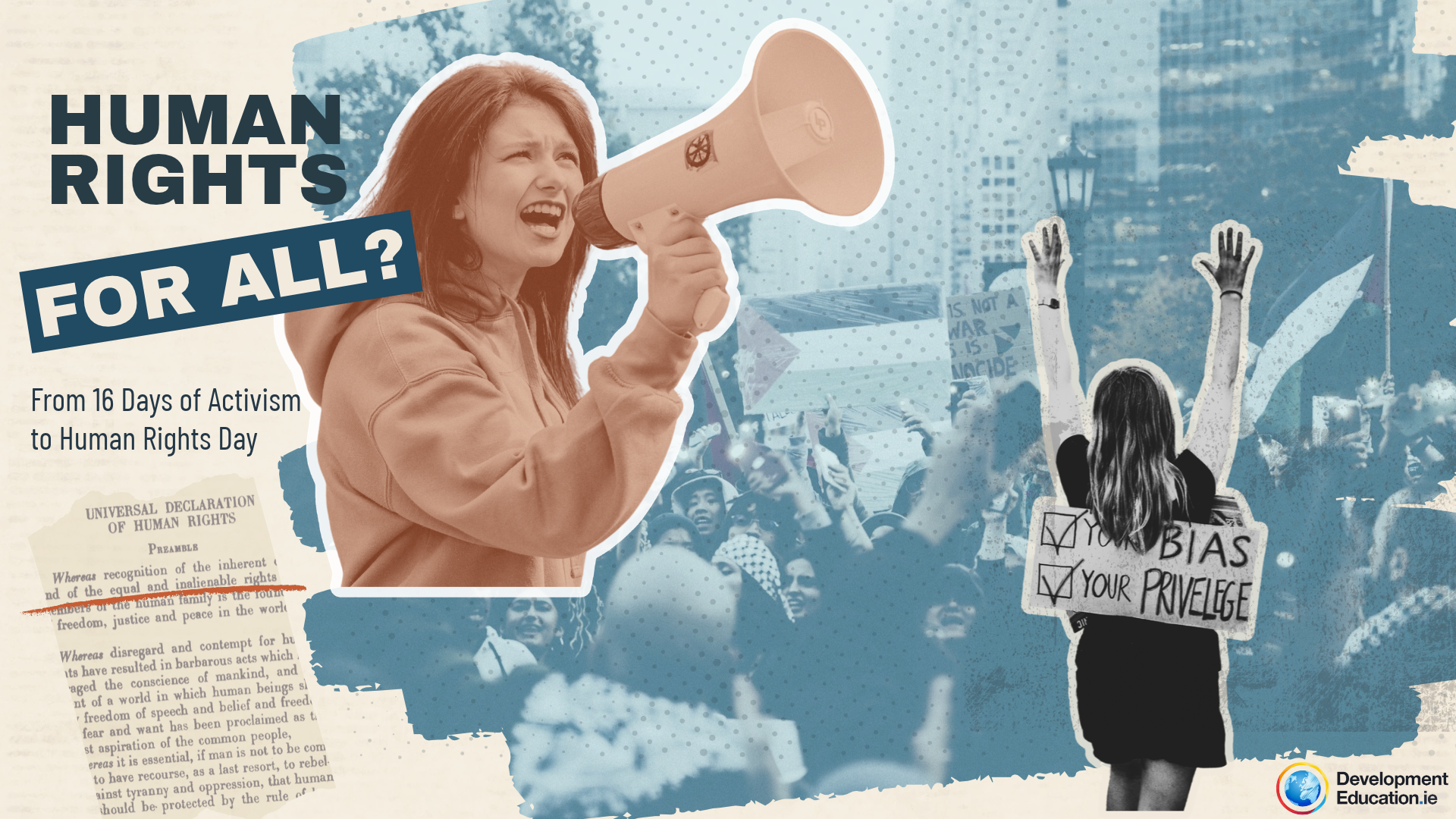
Each year, the 16 Days of Activism against Gender-Based Violence begins on 25 November, the International Day for the Elimination of Violence against Women, and ends on 10 December, Human Rights Day. The choice of dates is deliberate, recognising violence against women and girls for what it is: a human rights issue.
Much has changed since 1948, but there is still a considerable gap between the rights set out in the Declaration and the everyday experiences of people around the world.
Over the coming days, we’ll be adding a mix of resources, facts and figures, films, readings and teaching ideas to this blog, taking in some of the big human rights issues of our time, as well as stories of people standing up for their rights and those of others.
Plenty to explore, discuss and debate with learners.
Check back regularly for new additions, ideas and resources for your learning setting.
//
27 November 2026
18:31
Watch: Noisy Neighbour – what makes us speak up?
What does it take for us to knock on a neighbour’s door? And what makes us turn a deaf ear?
From our resource library, we’re revisiting this short advert by People Opposing Women Abuse (POWA) in South Africa.
Produced in 2010, the advert uses a real-life social experiment to deliver a powerful message about domestic violence and our willingness (or otherwise) to intervene.
More than 15 years on, the questions it raises are still worth discussing.
Content note: The video contains sounds depicting domestic violence.
Some questions to explore with learners:
What struck you most about the advert?
What might explain the different responses of the neighbours?
What does the experiment tell us about attitudes towards domestic violence?
How can we safely respond to violence in our communities?
Duration: 2 minutes 12 seconds | Recommended age group: 16+
13:00
The gendered dimensions of violence against Palestinians
To mark the International Day for the Elimination of Violence against Women on 25 November, EuroMed Rights published a joint statement signed by a number of civil society organisations, including 80:20 Educating and Acting for a Better World.
The statement looks at sexual and gender-based violence against Palestinians in the wider context of occupation, apartheid and dispossession, drawing on evidence from UN bodies and human rights organisations.
Among the issues raised are the destruction of reproductive healthcare services in Gaza, restrictions on access to humanitarian aid and reports of sexual violence against Palestinian detainees.
The signatories call on the EU, its member states and other countries to support independent investigations and ensure that those responsible are held to account.
An important read during the 16 Days of Activism, not least for the questions it raises about the responsibilities of the international community.